


The US-Israeli war on Iran is transforming the geopolitical order, and could even unleash a global economic crisis. The conflict has caused the largest oil shock in history, disrupting global markets and driving up fuel and food prices.
To better understand the implications for the world, Geopolitical Economy Report editor Ben Norton interviewed economist Michael Hudson, who discussed how Iran is challenging US dollar dominance and undermining Washington’s control over the global oil market, which has been a key pillar of US foreign policy.
Video
Podcast
Transcript
(Intro)
BEN NORTON: The war that the United States and Israel launched against Iran is having a massive impact on the global economy.
Every country on Earth is being affected, because this US-Israeli war has caused the largest oil shock in history — larger than the oil shocks of 1973 and 1979.
The effects are especially pronounced in Asia, which gets the majority of its oil imports from the Persian Gulf.
The Philippines has declared a national emergency, and it is now rationing energy, because it does not have enough oil, due to this war.
Japan also imports much of its oil from the Middle East, or West Asia. And this is why Tokyo has carried out the largest ever release of oil from its reserves.
Moreover, the 32 member countries of the International Energy Agency, the IEA, unanimously agreed to release 400 million barrels of oil from their emergency reserves.
However, this is only a short term band-aid measure. It’s not a long-term solution.
This is why the global price of oil only went down a little bit in response to the news of countries releasing oil from their reserves. And since then, the oil price has continued rising, because as long as this US-Israeli war on Iran continues, there are going to be massive disruptions in the energy market.
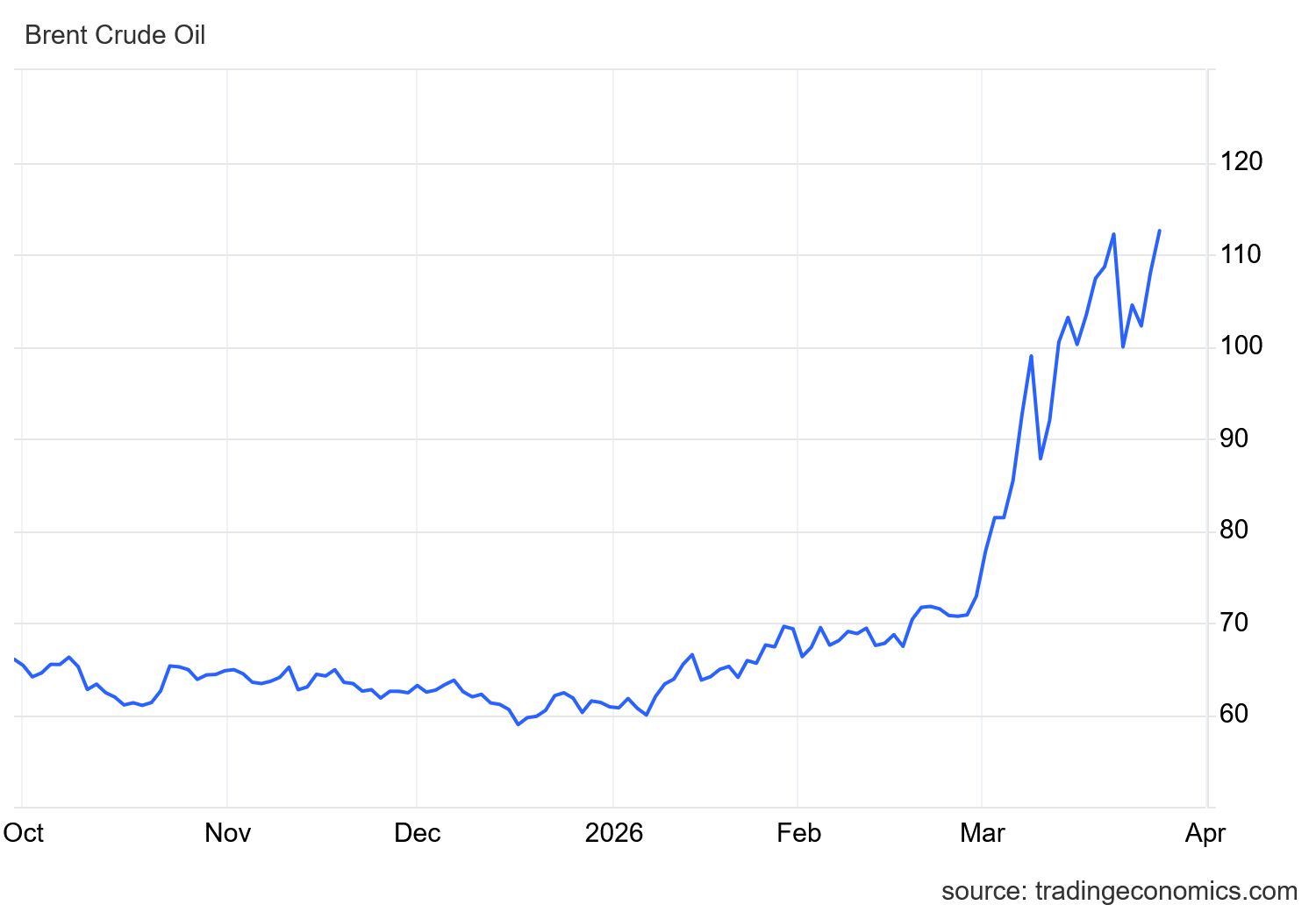
Given that oil is the most important commodity on Earth — and it’s used in many other products, and it’s used in all aspects of society in order to transport food and other goods — world leaders are now warning this could cause a global recession.
The head of the International Energy Agency said it very clearly. He warned that the US Israeli war on Iran has been a “major, major threat” to the global economy.
This war is causing not just gasoline prices to go up, but also food prices to go up, because so many fertilizers and chemicals used in fertilizers come from the Persian Gulf region.
It is also likely going to lead to higher interest rates, which will lead to increases in mortgage rates, and other rates on loans that are taken by average people. So this is going to hurt the poorest people the most.
So to make sense of how this war is going to impact the global economy, today we will be speaking with the renowned economist Michael Hudson, who is the author of many books, including Super Imperialism: The Economic Strategy of American Empire.
Michael Hudson has been writing articles and doing interviews explaining how this war is going to reshape the world economically and geopolitically.
In particular, Michael has argued that this war has meant that “multipolar oil markets are now a reality”.
This is because Iran is directly challenging the global dominance of the US dollar, and in particular the petrodollar system — the fact that, for decades, the vast majority of oil in the global market was priced and sold in dollars. Iran is now challenging that
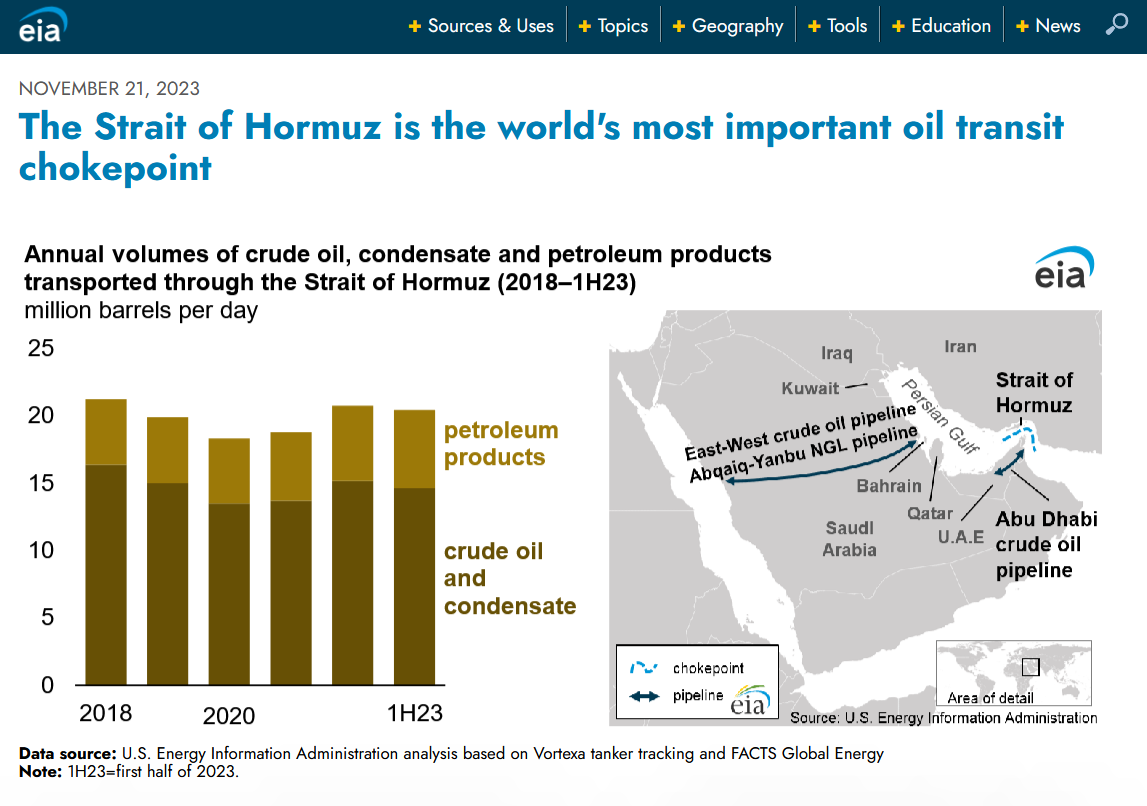
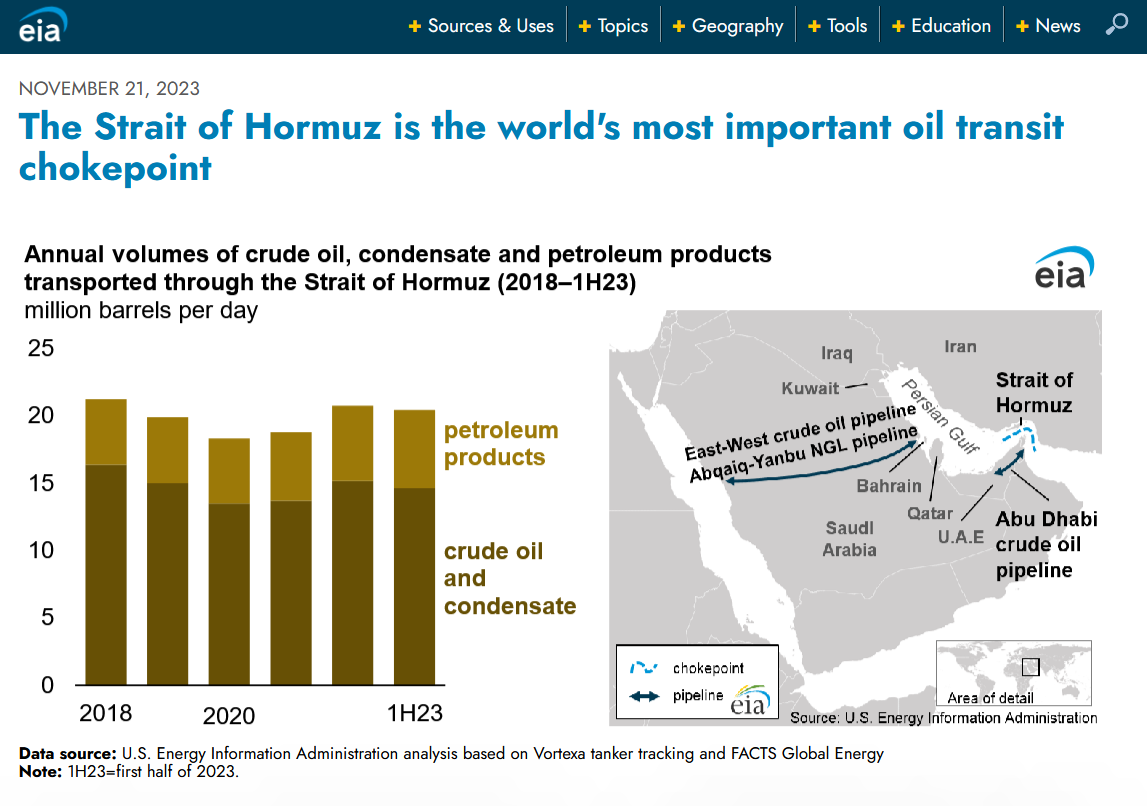
In response to this US-Israeli war of aggression, Tehran close down the Strait of Hormuz, which is the single most important oil transit chokepoint on Earth.
Every day, about 20% of the globally traded oil passes through this narrow strait — or at least 20% of global oil did pass through, before the US and Israel started this war.
Now Iran is telling countries that, if they want to pass through the Strait of Hormuz, they have to agree to sell oil not in US dollars, but rather in China’s currency, the yuan.
This is why some media outlets, such as the South China Morning Post, are now saying that this “Iran war could boost China’s ‘petroyuan’ and weaken US dollar dominance”.
Given the massive geopolitical and economic consequences of this war, I thought Michael Hudson would be the perfect guest.
So without further ado, we are going to play some highlights of what Michael said, and then we will go straight to the interview.
(Highlights)
MICHAEL HUDSON: Iran has said this is a phase change: we are now forever going to control the Strait of Hormuz in the Persian Gulf, and we are going to control the oil trade.
That means that, instead of the United States’ plans to use oil as a chokepoint on other countries to enforce their compliance with American foreign policy, it is now Iran that is in control of this chokepoint, and it can impose sanctions on the US and its allies, sanctions on Israel, sanctions on the Europeans, or any other allies of the United States.
So it has turned the tables on the whole US attempt to use oil as a means of control. Now what is at issue is Iran being able to achieve what the United States has based all of its foreign policy on: control of the international revenues from oil exports.
…
The American philosophy is, number one, you bomb civilians, you break all the rules of international law which are against that. You bomb civilians to demoralize them.
And if you concentrate, as Trump did, along with Israel, a few weeks ago, you bomb the schools, you bomb the hospitals. That’s American policy in foreign countries.
It’s most visible in the case of Israeli policy, in Gaza, and now the West Bank as well. And it is the same policy that the United States has followed in Iran.
Well, the idea was that this would demoralize the population, and the Iranian population would want to get rid of the ayatollahs and say, “We don’t want to be bombed anymore; we want to save the children; let’s make a deal and appoint a leader favorable to the United States so that it will stop bombing us”.
Well, this was nonsense from the beginning, but it was the guiding spirit of American foreign policy: bomb a country, and that will lead to a regime change, and a collapse.
…
This is a conflict, in Iran, to determine what will the shape of the international economy be? Is it going to restore American control of the oil trade and give it the chokepoint over the international economy that it is looking for? Or are we going to be independent of the United States?
That’s what this war is all about.
(Interview)
BEN NORTON: Michael, it’s always a real pleasure; thanks for joining us today.
Now, you have been talking about some of these issues that the world is now discussing due to the war in Iran — especially dollar dominance and the petrodollar system — you have been writing about this for decades, going back to the 1970s.
And in fact, the US government has also been planning a potential war on Iran for decades. This is not something new.
Now, Donald Trump is the first president who is actually crazy enough to try it. But I remember going back to the George W. Bush administration, after the US invaded Iraq, there was a lot of discussion of a potential invasion of Iran.
So, Michael, explain to us how you see this war. What is the bigger picture here, and how will this impact the world?
MICHAEL HUDSON: Well, you mentioned that it’s for the last few years or decades; it has actually gone back half a century.
Already in the mid-1970s, when I was working for the Hudson Institute, on contracts with the Treasury, and the White House, and the Defense Department, I sat in on meetings, and they were discussing all along how ultimately the United States was going to have to take control of all of the Middle Eastern oil, and that entailed conquering Iran.
And in the mid-1970s, at one military meeting, for instance, Herman Kahn was explaining how probably Balochistan was the main opportunity to begin carving up Iran into subject ethnic constituencies. And Balochistan, in between Pakistan and Iran, was probably the best place to start a separatist movement. There were military plans.
My field, in the mid-1970s, was oil and the balance of payments. I had that position at Chase Manhattan Bank for many years. I actually was the only — I was so low on the totem pole, being a technician and in my mid-20s, that I was the only person who was allowed to see all of the operating details and statistics of the US oil companies, the major companies, so that I could make a calculation as to the role that oil played in the balance of payments, supporting the dollar.
This was right after the United States was forced off gold, in 1971, because of the Vietnam War.
So, the United States all along has realized that what you’re seeing today was going to be the endgame of consolidating, they hoped, American control over the Middle Eastern oil; and they wanted their because the central point, the strongest lever that American foreign policy has had for the last century, is control of the world’s oil trade.
Because it’s so immensely profitable for the American oil companies themselves — it has given the oil companies major control over US policy — and also the US economy’s potential control over other countries, by the ability to turn off the supply of oil to other countries, thereby stopping their electricity production, stopping their chemical production, their fertilizer production with natural gas.
The oil industry includes the gas industry, because they’re so closely interconnected. All of this has been thought out. And every year, the military has been upgrading the long-term plans for — well, if we really, have to use force to entail our control over the Near East, the Middle East; if, for any reason, the OPEC oil countries want to become independent of the United States, and begin investing their oil profits outside of the United States, instead of sending all of their oil earnings to the United States, to invest in Treasury bonds, corporate bonds, US bank deposits, and stock holdings; well, if any of them should want to exert their own sovereignty and go their own way, we’re going to have to take over; and no matter what, we’re going to have to take over Iran, because that is the most powerful, final locking point of US control.
And, as we have discussed before, in 2003, General Wesley Clark came right out and said, well, we’re going to conquer seven countries in five years, culminating with Iran.
So all of this has been completely open. This is not simply Donald Trump’s war. It’s a war which he decided at this time, because America has steadily been losing its position of economic strength, military strength, and arms supply, and missiles, and aircraft, and bombs, as a result of the war, first in Ukraine, and then supplying Israel.
So there will never be a less bad time to go to war than at the present. And of course, it is a bad time, but it’s not as bad as it’s going to be. And the military, the neocons behind the military and behind the Central Intelligence Agency, are not going to give up.
They say, “Well, what do we have to lose? If we don’t conquer the Middle Eastern oil now, then we’re going to be losing what has become the major lever of American foreign policy”.
Donald Trump believed that he could conquer Iran, within two to four weeks. He actually believe that.
And his hope was that, by that time he went on his scheduled trip to China, he could confront China, saying, “Well, we’ve just caused a regime change in Iran. We’ve appointed an Iranian client oligarch, client dictator to take over and become sort of Iran’s version of Boris Yeltsin, administering Iranian oil in the interests of the United States”.
“So, we now have the power to impose sanctions on you, China. We can cut off your oil. But, you know, we don’t want to do that. If you begin to export the raw materials, the gallium, the tungsten, and all the other things that we need for our military that you’ve put an export control on, then we will give you the oil”.
Trump had hoped to be able to present China with that victory. Well, obviously that’s gone. The military miscalculated, because they could not think of an alternative that would threaten this grand plan.
Remember all of the American military attacks, for the last 50 years, ever since Vietnam — all of the wars that the US had, from Vietnam to Iraq, Afghanistan, Syria, Venezuela.
It has always been the United States and its allies, the coalition of the willing, against single countries. This is the first war that America has fought since World War Two where other countries that it’s fighting against are allied with each other.
It’s not just fighting against Iran now. It’s fighting against Iran, supported by Russia and China, because they all realize that this is a fight to the end, to decide: Is the United States going to be able to reassert its control over the world economy using monopolies? The oil monopoly, the information technology monopoly that it’s trying to do, the computer chip monopoly, the technology monopoly, also its ability to supply food to other countries, its exports and control of grain.
This is the last chance that it has. And there’s a feeling of desperation that has led the US planners to bet at all.
And that I think that it’s not going to work. All of the generals have told them that it’s not going to work. The generals who have been pessimistic have pretty much been forced out of the military, and the State Department, because, “If you’re pessimistic, well, why aren’t you on board? You know, why aren’t you on the team? Or are you Putin’s puppet? You know, you’ve just gotta have faith”.
America believed that it could not lose any war because its policy of bombing other countries was always going to work.
The American philosophy is, number one, you bomb civilians; you break all the rules of international law which are against that. You bomb civilians to demoralize them.
And if you concentrate, as Trump did along with Israel, a few weeks ago, you bomb the schools; you bomb the hospitals. That’s American policy in foreign countries.
It’s most visible in the case of Israeli policy, in Gaza, and now the West Bank as well. And it is the same policy that the United States has followed in Iran.
Well, the idea was that this would demoralize the population, and the Iranian population would want to get rid of the ayatollahs and say, “We don’t want to be bombed anymore; we want to save the children; let’s make a deal and appoint a leader favorable to the United States so that it will stop bombing us”.
Well, this was nonsense from the beginning, but it was the guiding spirit of American foreign policy: bomb a country, and that will lead to a regime change, and a collapse.
That was what America expected in Russia.
But Iran essentially has the same spirit that Patrick Henry had in America’s revolution against Britain in 1776. He said, “Give me liberty or give me death!”. And that’s exactly what Iran is saying.
For them, this is existential, because they know what the US plans are, since the United States has been so open about what its plans are.
Yes, they want a regime change; they want to break up Iran into parts; they want to take control of Iranian oil and use the oil export revenues to support the US dollar, and to support basically the US economy, and to give American foreign policy the option of turning off the oil to other countries, to say, “We can close down your industry, your chemical industry, all your industries that need electric power, oil, gas; we can do all that, if you take an independent policy, following your own sovereignty. And we in the United States reject the United Nations principle that every nation has its own sovereignty”.
This is the basic principle of Western civilization for the last half century, the basic principle of the United Nations Charter. All of that is being rejected by the United States.
And what it has done is galvanize other countries to recognize that, well, yes, this really is the final conflict.
This is a conflict, in Iran, to determine what will the shape of the international economy be? Is it going to restore American control of the oil trade, and give it the chokepoint over the international economy that it’s looking for? Or are we going to be independent of the United States?
That’s what this this war is all about.
BEN NORTON: Well said, Michael. You raised so many important points there. It’s hard to know where to start.
I wanted to just make a brief comment about this idea that the US has been preparing for war in Iran for decades and, as you said, was waiting for the least worst moment.
I think this is absolutely right, because there also were two major developments in the past two years that led to this war in Iran.
One was the overthrow of the Syrian government — which goes back to 2011, the beginning of the regime-change war that ultimately succeeded at the end of 2024, which was a major step toward war in Iran.
And then also Israel killed the leadership of the Lebanese resistance, which basically, they thought at least, would remove Lebanon from the equation.
So by removing Lebanon and Syria — at least they thought they removed Lebanon — then the US and Israel could attack Iran, by isolating Tehran from its allies.
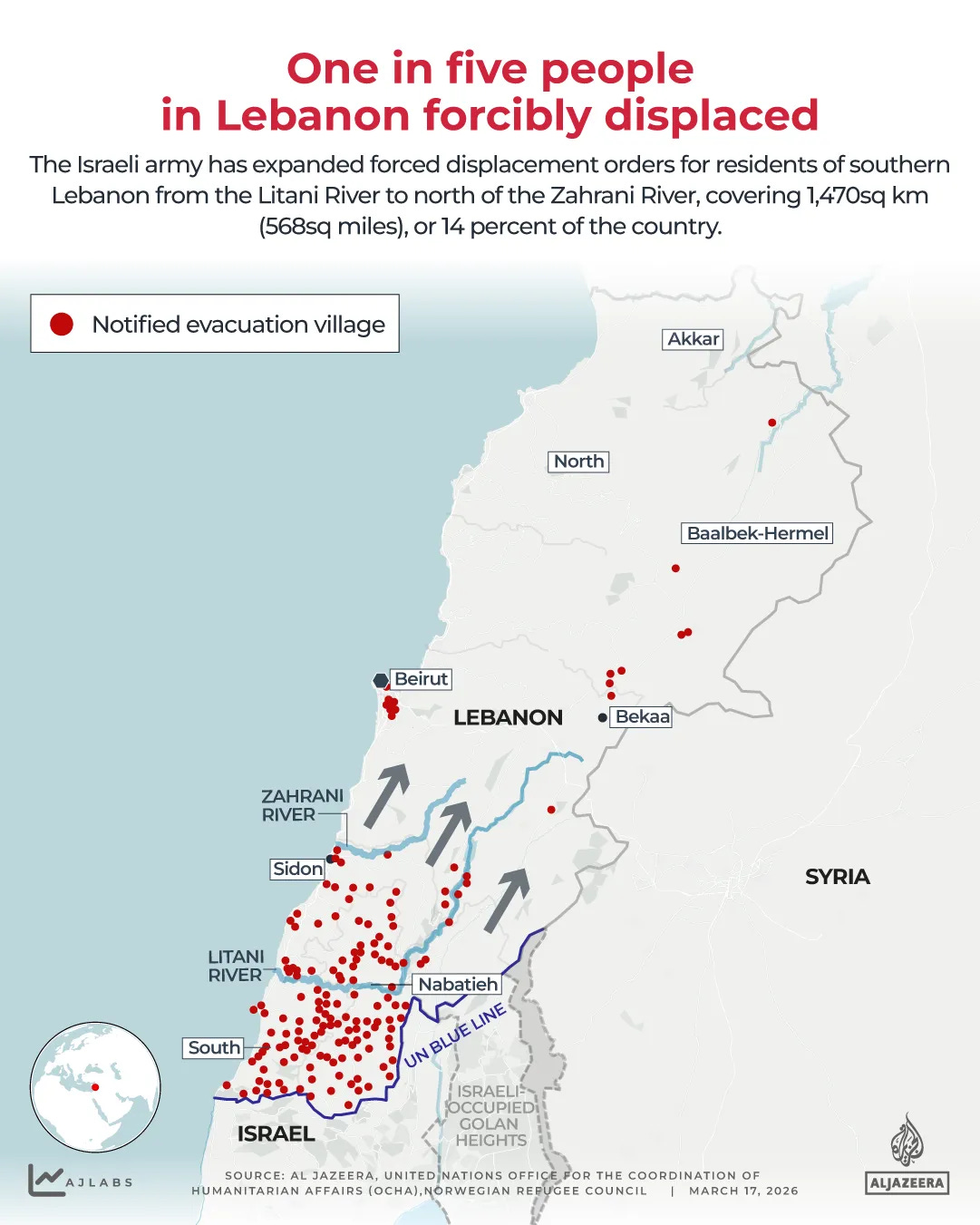
Now we have seen that there has still been some resistance in Lebanon. Although Israel has invaded Lebanon and is trying to colonize the south.
Anyway, I want to talk about more about this issue of the dollar system. I think this is so critical to understand this war.
You talked about how the US wants to use control of the global oil market in order to undergird the dollar.
You know, the petrodollar system really goes back to 1974, when the Richard Nixon administration, after delinking the dollar from gold, made an agreement with Saudi Arabia, which at that time was the leading oil producer in the world, to make sure that oil was traded exclusively in the dollar, which ensures global demand for the dollar.
It seems that Iran clearly understands the importance of this for US hegemony, the importance of the dollar system and the petrodollar, because Iran has targeted it directly.
Iran closed down the Strait of Hormuz and is demanding that countries that pass through trade oil in Chinese yuan.
Also, there have been reports that the Iranian military is targeting not only US military bases in the region, but also the offices of major US corporations, including US financial institutions and Big Tech companies, which have been building big AI data centers in places like the UAE.
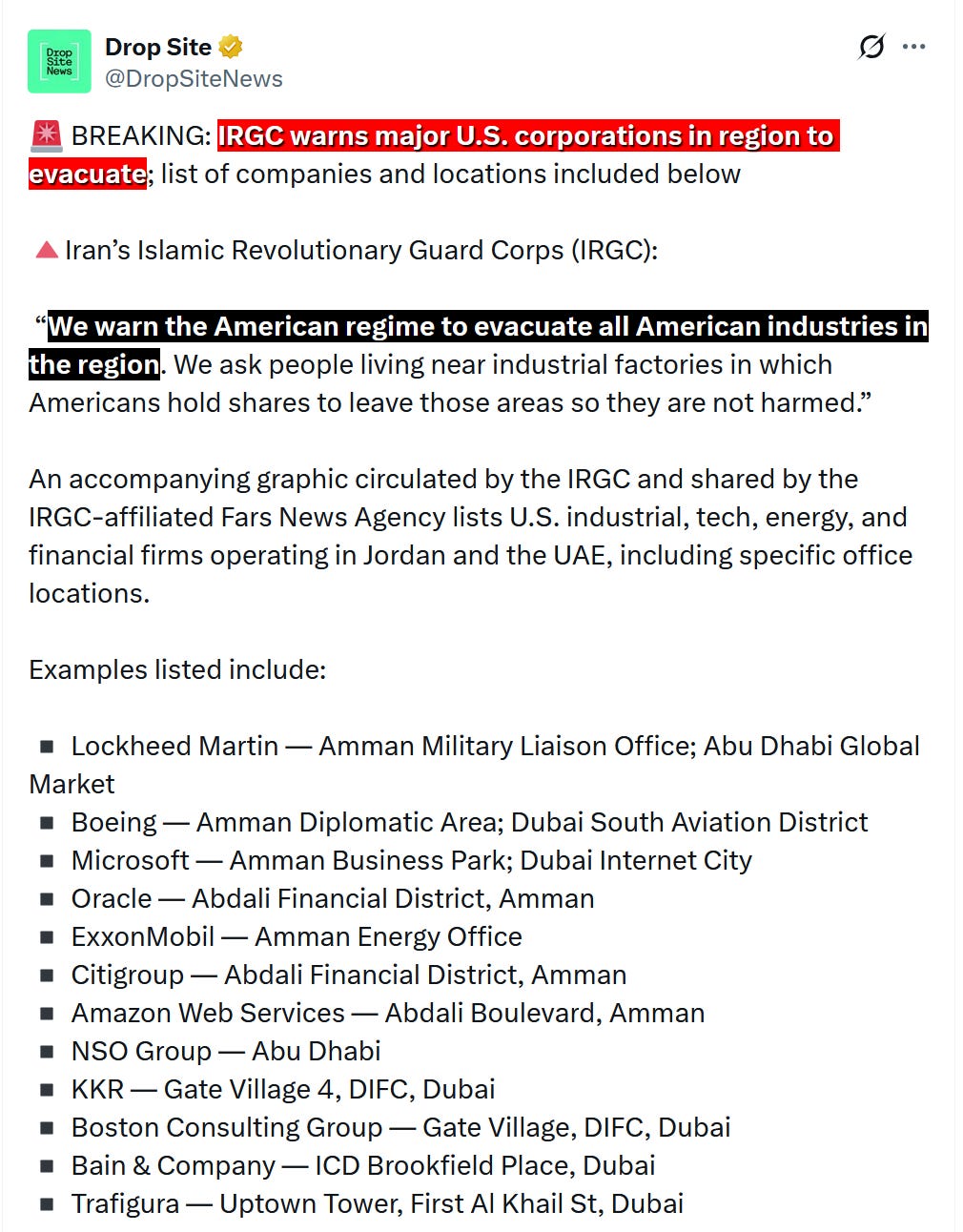
So I think Iran understands how critical the economic element is to this war. Do you want to talk more about that?
MICHAEL HUDSON: Yes, the United States’ plans to militarily control the Middle East were based not on its own fighting, because the United States had been exhausted by the Vietnam War — remember, in the mid-1970s.
The US has had two client armies fighting in the Middle East.
First of all, Israel is a client army. Already in the early 1970s, a deal was made — and Herman Kahn at the Hudson Institute played a big role in this. A deal was made with Senator Henry “Scoop” Jackson, one of the leading pro-military senators in America, that he would agree to use Israel as America’s proxy army.
BEN NORTON: This was famously spelled out by Joe Biden, when he was a senator. Biden gave a speech in which he said “Israel is the best investment we make”.
JOE BIDEN: (In 1986) Were there not an Israel, the United States of America would have to invent an Israel to protect her interest in the region. The United States would have to go out and invent an Israel.
(In 2022) I have often said, Mr. President, if this were not an Israel, we’d have to invent one.
(In 2023) I have long said, if Israel didn’t exist, we’d have to invent it.
MICHAEL HUDSON: Yes, this was very open at that time.
Well, later, after 9/11, and after President Carter backed the [Mujahideen] in Afghanistan, as the alternative to secular rule in Afghanistan, you had Al-Qaeda emerge as a Wahhabi terrorist army.
And the Wahhabis are the second force that America has used.
You mentioned Syria. And of course Syria has the ISIS leadership there, the terrorists. And they’re busy murdering everyone who is not a Sunni. They’re killing the Alawites; they’re killing the Christians. They’re the head-choppers, basically.
So these are the two proxy armies of the United States [Israel and the Wahhabis].
Well, what has made all of this urgent right now? It was number one, you had the Wahhabis working, for the last 10 years, hand in hand with Israel. The one non-Sunni group that they have not attacked is Israel. They have been working hand in hand, together.
Well, what has forced the hand of the military in Israel is Israel’s attack on Gaza, and the fightback from Lebanon, the civil war of resistance that has spread throughout the Middle East; and the worldwide criticism of the [Gaza] genocide that you’ve seen from the United Nations and the International Criminal Court.
So all of this has forced the hands of [the US and Israel], saying, “Well, are we going to have a take over?”
Israel now is trying to take over Lebanon. I guess the Israelis are going to need somewhere to move, if Iran is successful in sort of destroying the economic foundations of the Israeli state.
This is the military setting for all of this, and it’s the financial setting.
I want to mention again the control of the petrodollars that you mentioned.
It wasn’t just pricing oil in dollars. Everybody, all countries, were pricing the exports of copper, everything in dollars, because that was still the main currency.
Almost seamlessly, instead of countries, keeping their international reserves in the form of gold, and US dollars that were as good as gold, even when the dollar wasn’t as good as gold anymore, they continued to trade in the US dollar.
Well, the issue was, where were these dollars going to be invested?
Under the rules of Kissinger — and all this was explained to me by the Treasury and the State Department, in 1974 and 1975 — the US military told Saudi Arabia and other OPEC countries, “You can charge whatever you want for oil, but you have to use the surplus have to invest in the United States. We’re not going to let you buy control of any major American firms. You can’t buy American companies; only we can buy control of foreign economies. You’ll buy bonds. You can finance American industry and American companies. You can buy stocks in the companies. You can make money by just depositing your money in banks”.
These were the petrodollars. The petrodollars were the savings of OPEC countries invested in banks.
Well, this recycling of OPEC surpluses now is not as important as it was in the 1970s. In the 1970s, these petrodollars came into US banks. And what were they going to do with it? They lent it to Global South countries, to finance their trade deficits, their balance of payments deficits.
And this ended up in a collapse of the Latin American foreign dollar debts, and other debts. And later it led to the Asian crisis of 1998, which I think is going to be a paradigm model for what’s going to happen the rest of this year.
But now Saudi Arabia and the other countries have, for the last 10 or 20 years, they’ve used their export earnings to build up their own economies in sort of crazy ways, building huge luxury real estate in the desert, with huge desalinization plants to supply the water for all of this domestically.
But they still have enormous savings of bonds, stocks, and financial savings in the United States.
Now that the OPEC countries are blocked from having export earnings, they’ve announced, “Well, we’ve actually debt-leveraged our own economy. Rich as we are, our real estate projects and our investments are financed by debt, and we have to begin selling off our holdings of US securities, and gold, in order to keep our domestic budgets and the balance of payments in balance”.
So all of this now is leading to a sell-off of dollars. And this has reversed what was the whole petrodollar, the whole inflow of OPEC money, into the currency, of oil into dollars. Now, this is becoming a drain on dollars.
So that is another threat.
Iran has said, “This is a phase change. We are now forever going to control the Strait of Hormuz in the Persian Gulf. That’s why it’s called the Persian Gulf, because it’s ours. And we are going to control the oil trade”.
And that means that, instead of the United States plans’ to use oil as a chokepoint on other countries to enforce their compliance with American foreign policy, it’s now Iran that is in control of this chokepoint, and it can impose sanctions on the US and its allies, sanctions on Israel, sanctions on the Europeans, or any other allies of the United States.
So it has turned the tables on the whole US attempt to use oil as a means of control.
Now what is at issue is Iran being able to achieve what the United States has based all of its foreign policy on, control of the international revenues from oil exports.
And the determination of who will be able to buy this oil, and natural gas, and helium — these three things — and also by controlling the Strait of Hormuz, it controls the inward shipping of food and other materials to the OPEC countries, so it has a chokepoint over OPEC countries, as well as over foreign oil users.
BEN NORTON: Yeah, Michael, I want to talk more about the energy element here.
The International Energy Agency referred to the energy crisis that we’re seeing now as the largest oil supply shock in world history.
It’s larger than the oil crisis that was caused by the 1973 OPEC embargo, which was also related to an Israeli war of aggression.
And then in 1979, with the Iranian revolution, there was another oil crisis.
But today we’re seeing the biggest oil crisis in history.
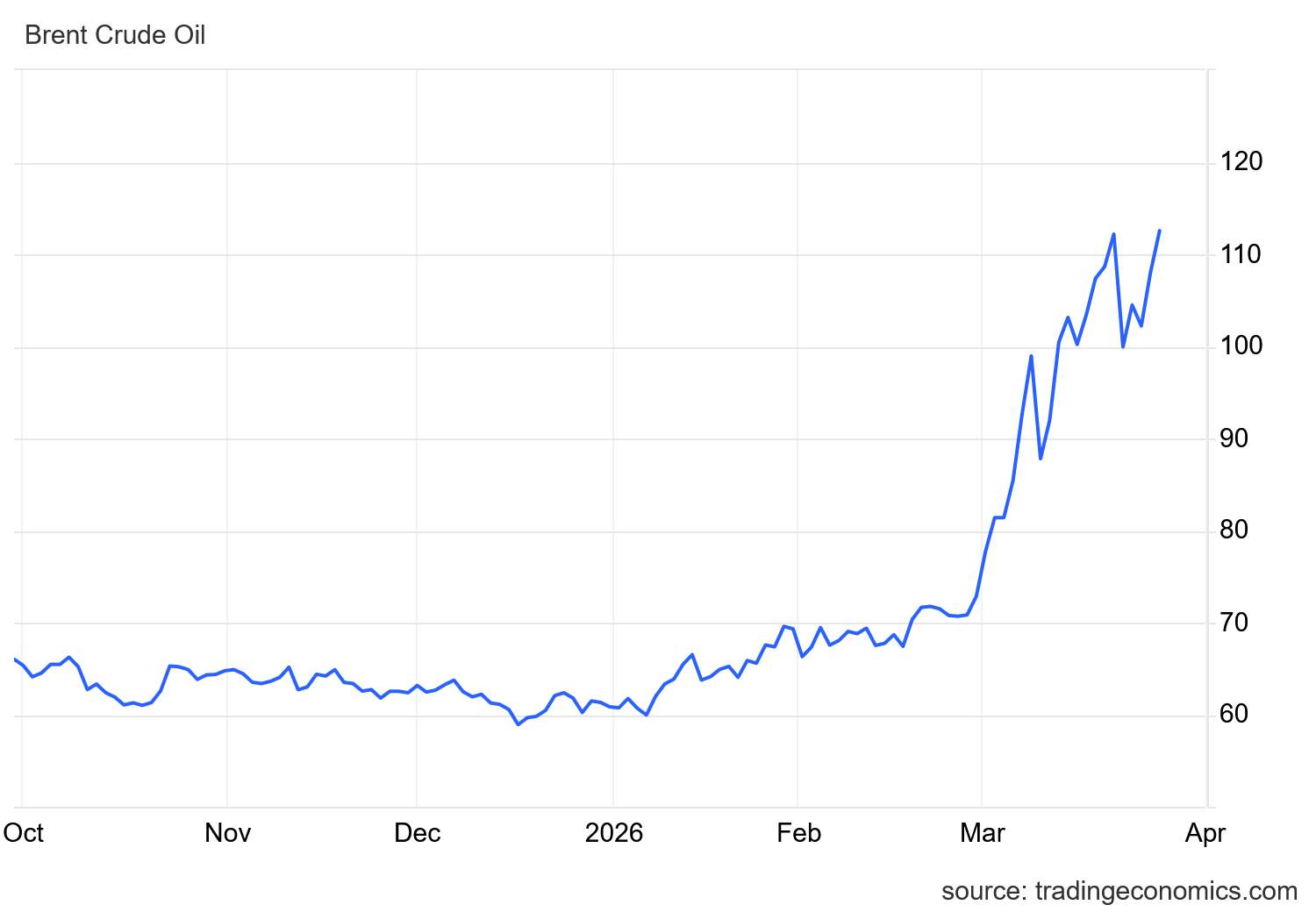
The price of crude has skyrocketed, and this is going to fuel inflation all around the world, because, of course, oil is a crucial input in many other products, and oil is needed to transport most goods, especially food.
Moreover, a lot of fertilizers and chemicals that go into fertilizers come from the Persian Gulf. So this could likely create a food crisis, which is especially going to hurt the Global South.
Of course oil-exporting countries could potentially benefit from higher revenue — although in the Gulf, a lot of the oil and gas infrastructure has been damaged by this war. So some of these Gulf regimes might not see some of the benefits from increased export revenue.
But the majority of Global South countries import oil, energy, and other commodities. And as the price of those commodities increases, it’s going to also be a significant drag on their economies.
It’s likely going to lead to current account deficits. And that means that, in the Global South, a lot of their currencies are going to start falling against the dollar, which will likely lead to capital outflows — you know, the so-called hot money, as foreign investors just sell all of their holdings in emerging markets.
So we could see currency crises, economic crises, energy crises, food crises.
This this war of choice, this war of aggression, that Trump and Netanyahu started, could cause a massive economic crisis that will especially hurt the Global South.
Do you see it the same way?
MICHAEL HUDSON: Yes, and all of this was anticipated.
First of all, if you want to see a paradigm, a model of what will happen, look at what happened to German industry after the United States and Europe imposed sanctions on buying Russian gas and oil.
German industry collapsed, and Europe and Germany are now suffering a depression. They’re in for a great depression.
What happened in Germany destroyed its economy, and led its chemical industry to close.
Oil is not only for energy. Oil is for chemistry, as you pointed out. It’s the glass-making industry, and fertilizer.
Well, fertilizer especially right now is important, because it’s made out of natural gas. And when Iran bombed Qatar, Qatar was the major exporter of liquefied natural gas.
This natural gas is what was providing fertilizer to in other countries, especially to America’s allies: Japan, Korea, the Philippines. They’re all in crisis.
And helium, along with the natural gas — the fact that helium now is not available to, let’s say, Taiwan, and its semiconductor industry, and electricity. The oil is not available to Taiwan.
How is Taiwan going to make the semiconductors that are supposed to be the key to America’s information technology control, to all of the computer chips and monopolies that it had hoped to have? So this is far reaching.
Also, we’re about to be, in the northern hemisphere, entering the planting season. And the planting season requires fertilizer.
Well, already the price of fertilizer, made out of gas largely, is rising in the United States. That’s putting a squeeze on farms. And the farmers in America, are claiming, what I’m sure farmers all over Europe and the Global South countries are experiencing, “We cannot make a profit, selling our crops at today’s prices, if we have to pay so much for fertilizer, and farm equipment that Trump has imposed tariffs on, that we lose money by producing crops”.
So what are they going to do?
This is causing an agricultural crisis. And obviously the countries that are going to be left out most of all are the countries that can least afford to pay the higher prices for fertilizer, gas, and oil. These are the Global South countries.
Because, in addition to having to pay for oil and gas, and its byproducts, they have to pay their foreign dollar debts, which are falling due. Something has to give.
There are going to be financial defaults. Other countries are going to say, “What are we going to do? Are we going to do what Europe has done, saying, well, there’s a budget crisis, our prices are going up for oil. We’ve got to subsidize the homeowners, so they can heat their apartments with gas or with oil. Our labor is already living on the brink, running up, increasing debt. We will lose the elections in Europe, just like in America, if consumers have to spend so much more money on oil, gas, heating their apartments, their electricity rates, if they default. So we’re going to have to cut back all other social spending, while we increase our military spending”.
So this is going to lead to a political crisis, of pro-war vs anti-war, pro-US vs anti-US feelings, all the way from Europe to the Global South countries, and the Asian countries that are America’s allies.
How can Korea and Japan pay the $350 billion that the Korean parliament has said it has just passed, saying, “We’re going to pay Donald Trump $350 billion for him to use, at his discretion, so that we will not lose the US export market for our products”.
And Japan has promised $650 billion. How can they possibly do this if they don’t have the gas and oil that they need to make the exports to the United States?
Somebody there must be thinking, “Well, if we don’t have oil and gas, we’re not going to have exports to the United States. So we don’t have to give the United States the $350 billion from Korea and $650 billion from Japan”.
All these deals that Trump has made will be unwinding.
BEN NORTON: Well, Michael, I think that’s a perfect note to end on. Thank you for joining me.
Unfortunately it looks like this war is going to continue, but I’m sure I’ll bring you back soon to talk more about the global implications of this conflict. Thanks a lot.
MICHAEL HUDSON: I look forward to it. Thanks for having me.
Ben, thank you as always for your in-depth, 365 degree analysis of this crisis that cannot be found anywhere, not even by a long shot. You have made all of us who listen to and follow you a lot smarter.
Thanks 🙏