


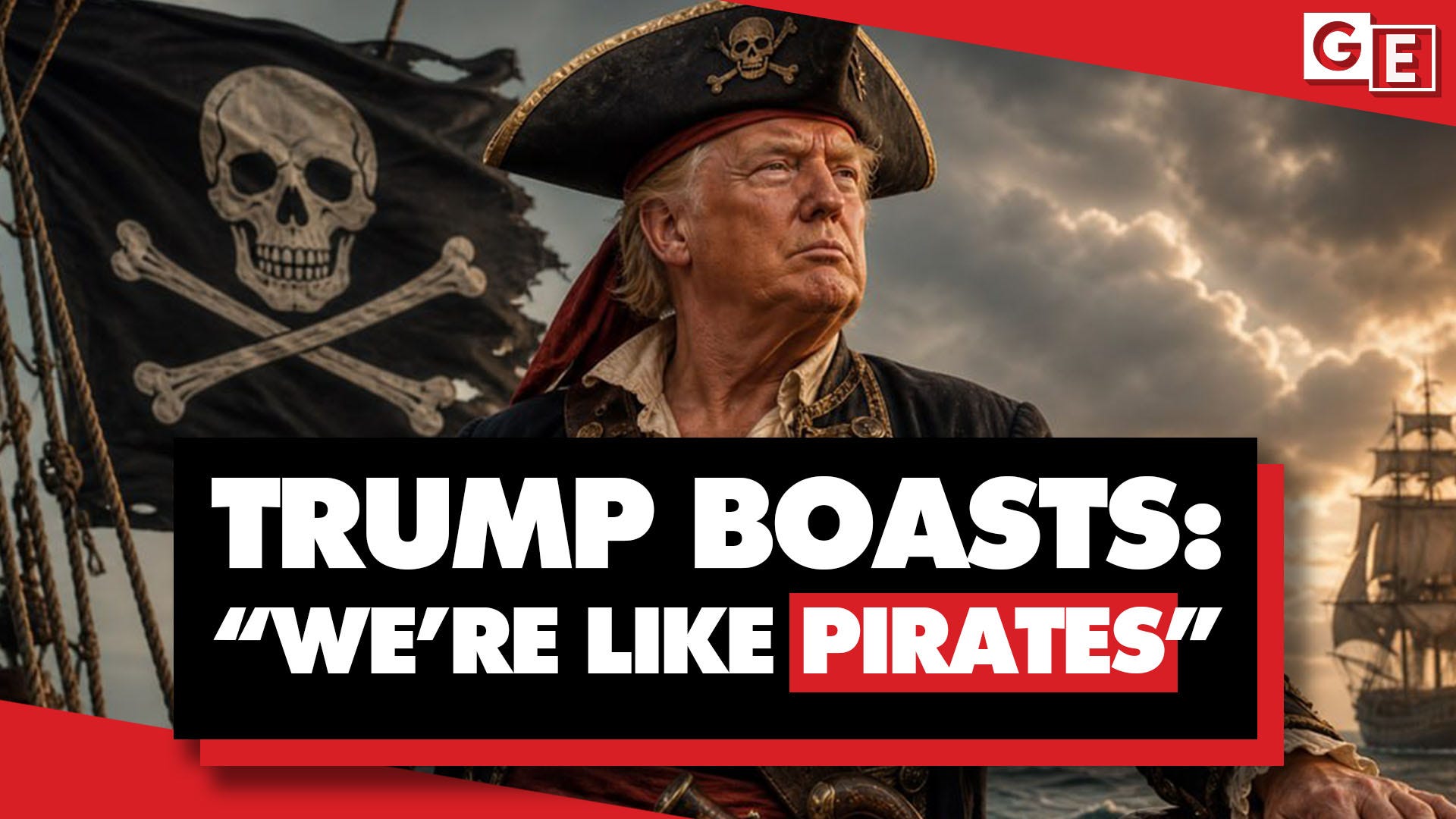
It’s not often that the leader of a country boasts that he and other government officials act as pirates. But that is exactly what happened this May.
Donald Trump gave a speech in West Palm Beach, Florida in which he bragged about the blockade that the US military has imposed in the Strait of Hormuz, off the coast of Iran.
Trump proudly stated that the US military is seizing cargo ships full of Iranian oil.
“We took over the cargo, took over the oil”, Trump gloated. “It’s a very profitable business. Who would have thought we were doing that? We’re like pirates!”
This is how the US president described the operation:
We have such a great military and great navy. And they were going straight through, and they said, “Turn your ship around!”. And there was no response. “Turn your ship around! Evacuate your engine room immediately!” And you see all these guys running out of there.
Now, they’re five miles away — in one shot, into the engine room, blew up the engine room; the ship stopped, and they used tugboats. And then we landed on top of it — on top of everything else — we then land on top of it.
And we took over the ship; we took over the cargo, took over the oil. It’s a very profitable business.
Who would have thought we were doing that? We’re like pirates. We’re sort of like pirates. But we’re not playing games.
Iran had initially condemned these US attacks as “acts of armed piracy”. Al Jazeera debated whether or not they constituted piracy. But then Trump came out and admitted it.
Previous acts of US government piracy targeting Iran and Venezuela
This US government piracy is not new, either. Washington has engaged in these acts for many years, and not just under Donald Trump.
In fact, in 2023, the Joe Biden administration confirmed that it seized another cargo ship, full of nearly 1 million barrels of Iranian oil.
Moreover, in 2020, during Trump’s first term, the US Department of Justice (DOJ) boasted that it commandeered a “multimillion dollar fuel shipment by the Islamic Revolutionary Guard Corps (IRGC)”, which “was bound for Venezuela”.
“These actions represent the government’s largest-ever seizure of fuel shipments from Iran”, the DOJ wrote at the time.
The fact that this previous US seizure impacted not only Iran but also Venezuela is important, because Caracas has also been a target of Washington’s piracy.
In late December 2025 — just a few days before the US government invaded Venezuela and kidnapped its internationally recognized President Nicolas Maduro — Trump proudly stated that the US military was taking control of ships full of Venezuelan oil, and that Washington would steal both the crude and the vessels themselves.
At a press conference, a reporter asked Trump what the US government would do with the Venezuelan oil seized in previous acts of piracy.
“We’re going to keep it”, the US president chirped. He added, “We’re keeping the ships also”.
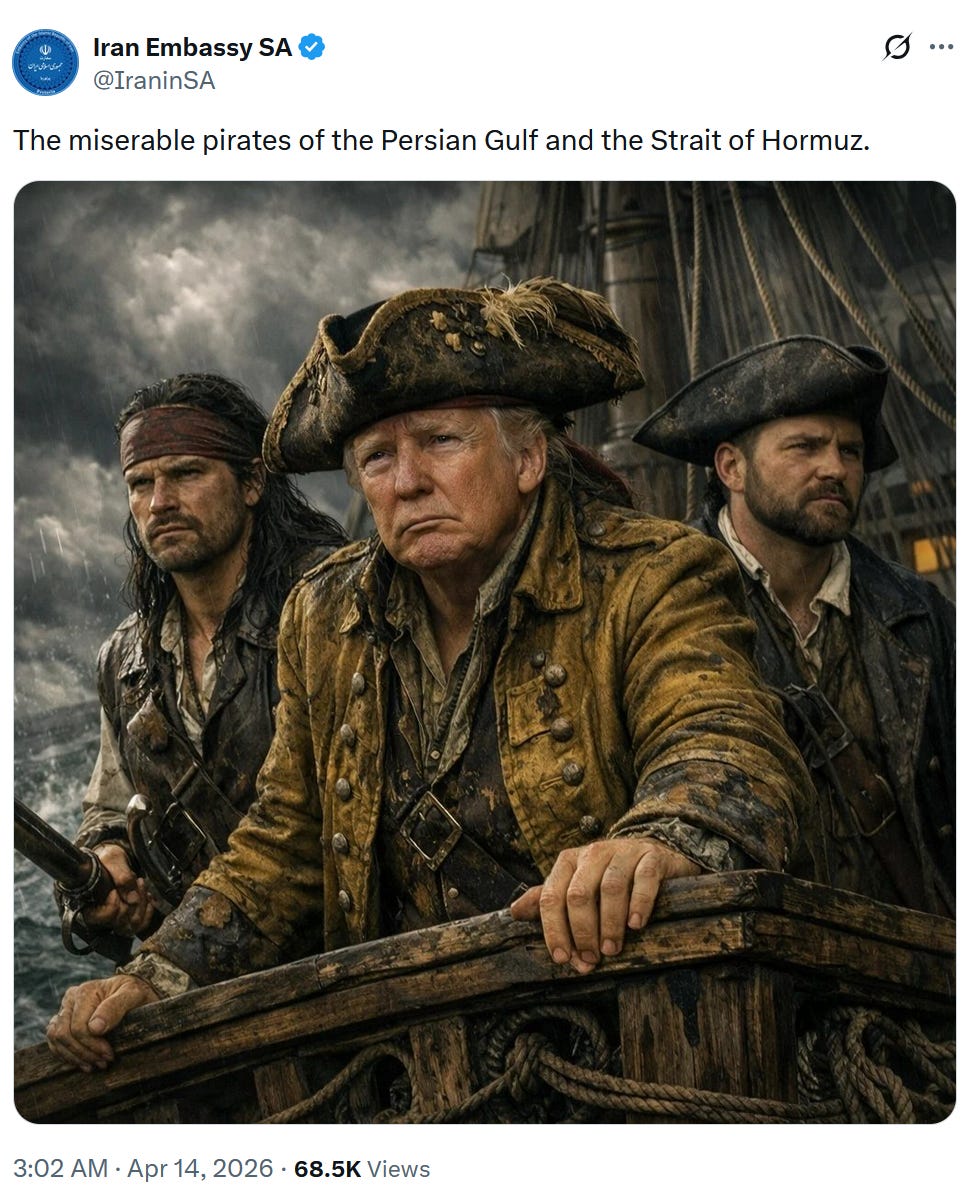
Critics on social media made AI memes depicting Trump and his top cabinet officials as “pirates of the Caribbean”.
Iran’s embassy in South Africa also dubbed US officials the “miserable pirates of the Persian Gulf and the Strait of Hormuz”.
US war unleashes energy, economic, and food crises
Trump’s war of aggression against Iran has caused serious geopolitical repercussions for the global economy.
The Strait of Hormuz, which is blockaded by the US military, was described by the US government’s Energy Information Administration (EIA) as “the world’s most important oil transit chokepoint”.
Approximately 20% of globally traded oil transited the narrow strait on a daily basis before the US and Israel launched a surprise attack on Iran on 28 February.
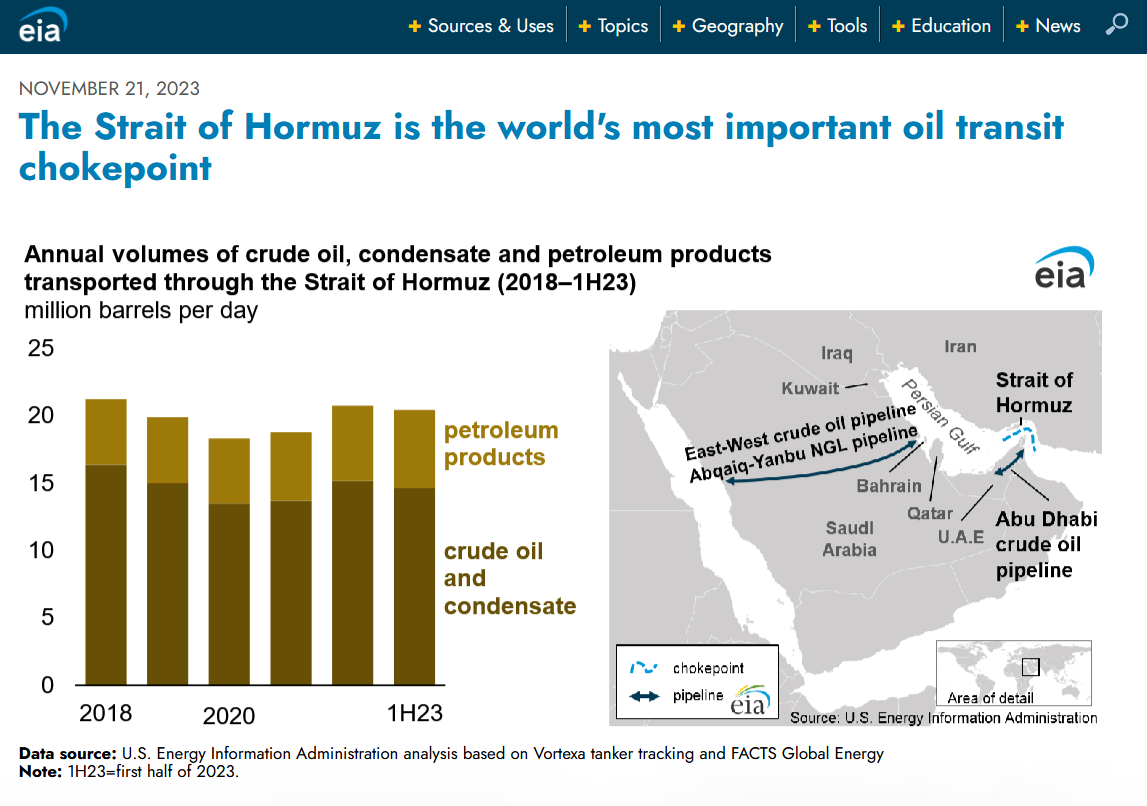
This US-Israeli war has unleashed the largest oil crisis in history, according to the International Energy Agency.
This is threatening not only economic crisis, but also a food crisis, because many of the chemicals used in fertilizers come from the Persian Gulf region, and farmers around the world now find it difficult to purchase fertilizer.
China orders domestic companies to ignore US sanctions
In addition to that, the Trump administration has targeted China as part of its war on Iran.
China is the largest trading partner of Iran. China is also the number one importer of oil on Earth, and it buys more than 80% of Iranian oil exports.
The US Treasury announced on 24 April that it was imposing sanctions on Chinese companies that purchase Iranian oil, as part of what it called Operation “Economic Fury” (a reference to the Pentagon’s name for its war on Iran: Operation Epic Fury).
Then, on 1 May, the US State Department said it had also levied sanctions against Chinese firms.
“U.S. Sanctions Tighten Grip on Iran-China Oil Trade”, the State Department declared in a press release.
Washington wrote that it is “taking decisive action to disrupt Iran’s illicit oil trade”.
In reality, Iran’s oil trade is not “illicit”. Iran is allowed to sell oil to whomever it wants.
The US sanctions against Iran are illegal, according to international law. They are known as unilateral coercive measures, as they do not have the approval of the UN Security Council.
This means it is actually the US government that it is engaged in illicit activity (like piracy).
But what was important about the press releases from the Treasury and State Department was that they identified several different Chinese companies that were being hit by US sanctions.
In particular, the US government sanctioned Hengli Group, a Chinese petrochemical giant.
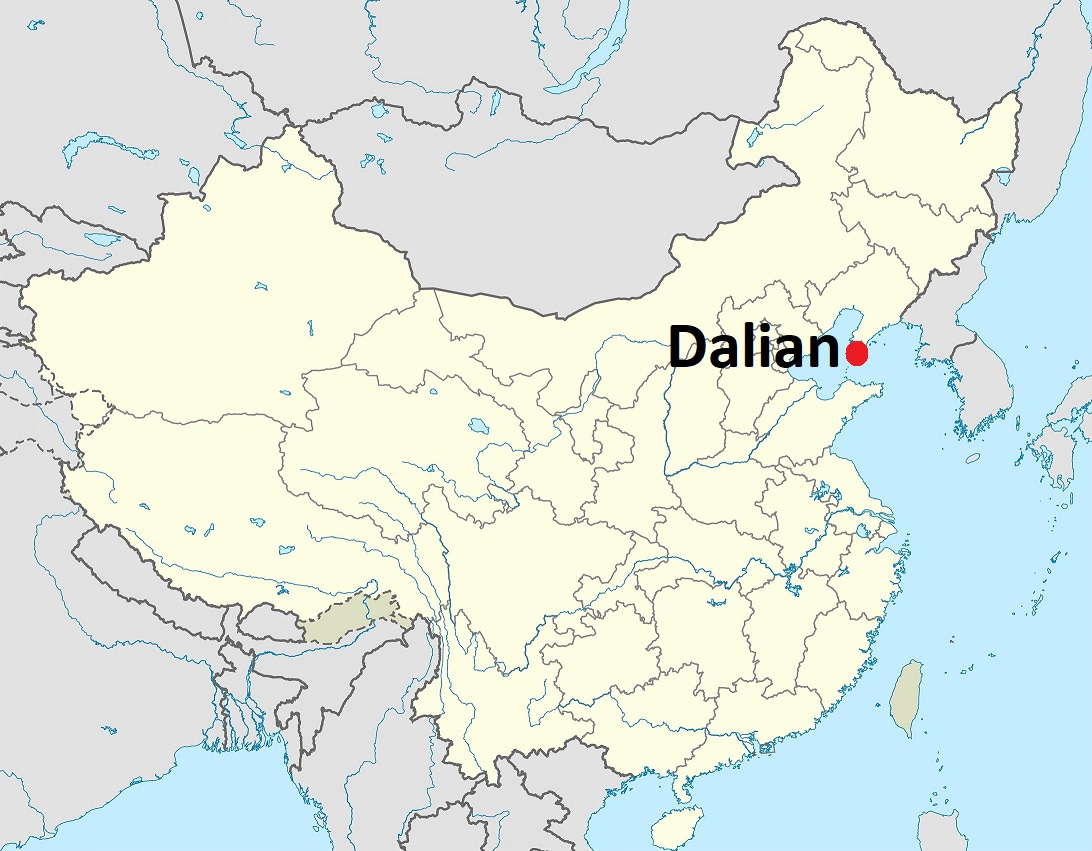
Washington targeted Hengli’s massive petrochemical plant in Dalian, which refines 20 million tons of crude oil every year.
This facility is very important for the Chinese economy. Dalian is a coastal city in the northeast. It plays a crucial role in the petrochemical industry.
Therefore, China was compelled to defend itself against these unilateral US sanctions.
In response, Beijing ordered all Chinese companies not to comply with US sanctions.
This was a very significant geopolitical development.
The Chinese government has always opposed unilateral US sanctions, and Beijing has never abided by them. However, in this case, the Chinese government went a step further.
Henry Gao, a professor of law at Singapore Management University (and a critic of the Chinese government who is often quoted favorably by US corporate media outlets), explained the significance of Beijing’s decision.
China’s Ministry of Commerce “just invoked the blocking statute for the first time, ordering all firms not to recognise, enforce, or comply with US sanctions”, he wrote.
Gao argued that this is an example of how an economic “decoupling is coming”.
While the Chinese government had never recognized US sanctions, many Chinese companies would still abide by such sanctions, because they were afraid of being hit by US secondary sanctions.
The Chinese government has now told domestic firms that this is illegal. It is legally mandating that US sanctions be ignored.
In April, the US Treasury sent letters to Chinese banks, threatening to hit them with secondary sanctions for facilitating financial transactions with Iran.
However, with the Trump administration’s sanctions on the petrochemical giant Hengli Group, the US government crossed a red line.
Chinese analyst TP Huang noted, “Hengli is a huge deal. China is entirely willing to fight economic war over this from what I can see”.
The “Trump admin stepped over the line” on this issue, he wrote.
Dalian Changxing island is the end point and export terminal for northeast provinces’ entire green hydrogen strategy, where green chemicals get shipped here for shipping, bunkering, and chemical production.
Hengli is a huge deal here, other Chinese companies can’t avoid working with them.
Western sanctions kill half a million people per year on average
China’s response is very significant, and demonstrates how the US government’s constant abuse of sanctions has increasingly backfired, while fueling even more geopolitical conflict.
The US government has imposed sanctions on approximately one-third of the countries on Earth, including more than 60% of low-income nations, according to a 2024 report in the Washington Post.
Washington’s incessant global economic warfare has caused tens of millions of deaths.
A peer-reviewed academic article published in 2025 in the leading medical journal The Lancet concluded “that sanctions do kill: economic sanctions imposed by the USA or the EU were associated with 564,258 deaths … annually from 1971 to 2021, higher than the annual number of battle-related casualties (106,000 deaths)”.
That means Western sanctions killed roughly 38 million people over 50 years.

shocking US behaviour. Please keep informing us of this rogue state that is the Devil IsRael states of America.
It’s an insult to pirates past and present