

By Joe Scholten
I wrote an article on the topic of food security in China in 2022. The main rationale for that prior essay was that there had been warnings of a global food crisis as the result of the war in Ukraine.
Indeed, prices of staple commodities like corn, wheat, and soybeans nearly doubled in price in the first year of the conflict, and millions were pushed into hunger worldwide.
In the United States, this was one of the leading causes of rapid grocery inflation in 2022, contributing to an 11.4% increase in grocery prices, per the USDA.
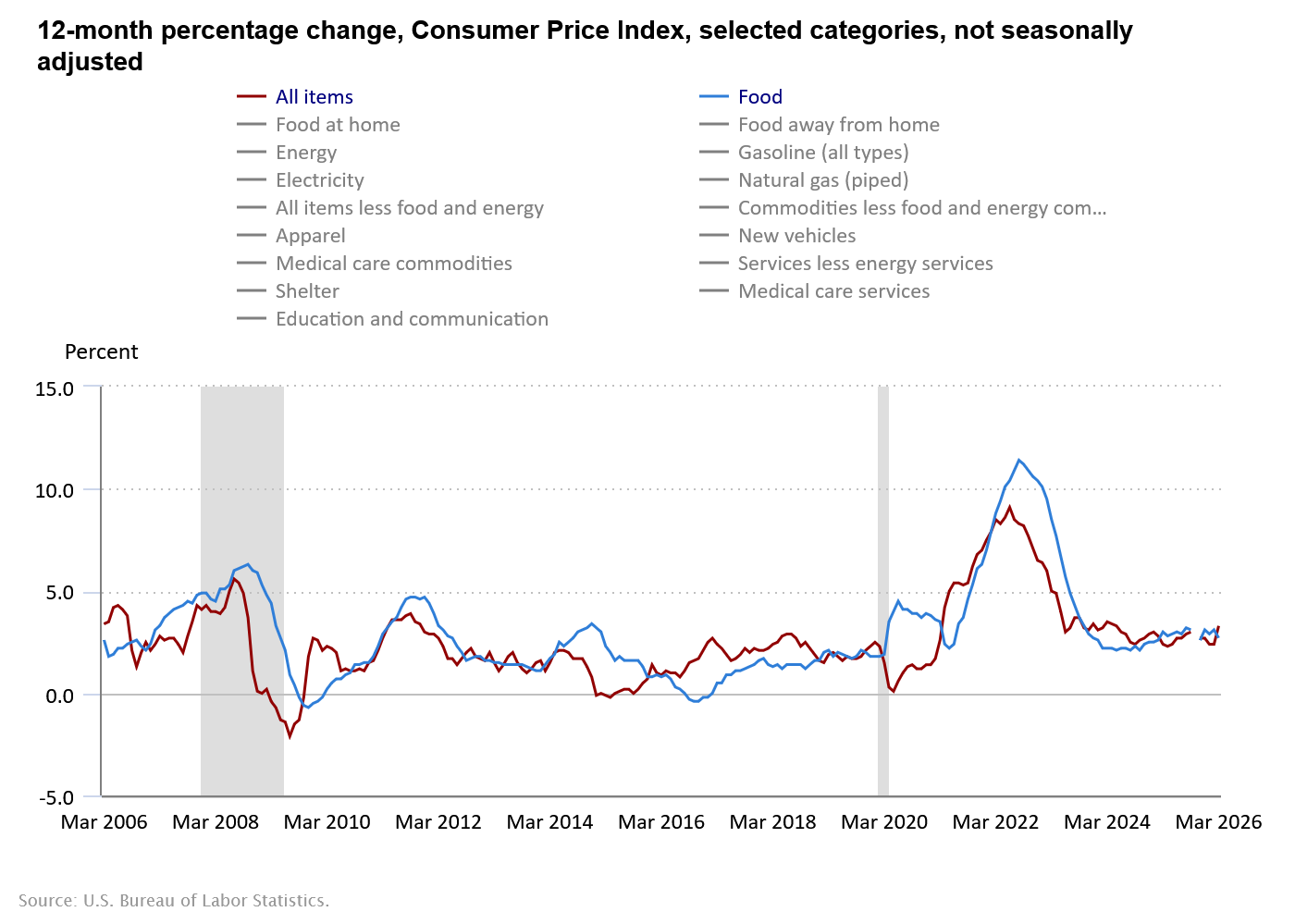
China however largely remained unscathed, with changes in grocery prices remaining much lower than those in the United States over the same period of time.
A food crisis came, and although it hit the Global South much harder than the imperial core, hit the imperial core it did.
However, China was noticeably insulated from this previous food crisis.
Over time, some attention was drawn to Chinese food policy. Economists like Isabella Weber highlighted that Chinese strategic food reserves helped to ensure that grocery prices didn’t skyrocket for China, like they did elsewhere else in the world, amid one of the worst food crises to hit the international community in decades.
Amusingly enough, even normal Westerners who left the popular app Tiktok during the temporary ban in January 2025 saw firsthand on the Chinese app Rednote (小红书) how much more affordable groceries were in China for the average person.
A new global food crisis
Today, the world is facing another global food and energy crisis, caused by the US-Israeli war on Iran and the disruption of supply chains in the Persian Gulf.
Given this new crisis, revisiting the topic of China’s food security seems prudent, to assess its strengths and see what could be learned from these methods.
If reporting is to be believed, this present conflict in West Asia could push as many as 45 million people into hunger, in addition to making the hundreds of millions already in hunger face even more dire circumstances, as a direct result of the US’s imperial war of aggression against Iran.
Food prices in countries that are much more insulated will also increase, likely as much as, if not even more than, they did in 2022.
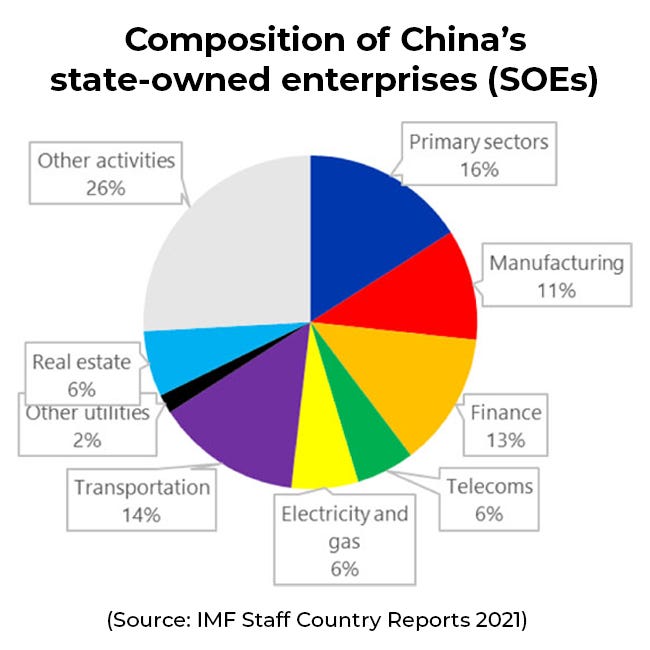
In China, however, the government has state control over the commanding heights of the economy. In practice, this means that state-owned enterprises (SOEs) place strategically important industries under government control, and operate them as businesses that serve socially beneficial purposes, as opposed to existing for quarterly profit maximization on behalf of shareholders.
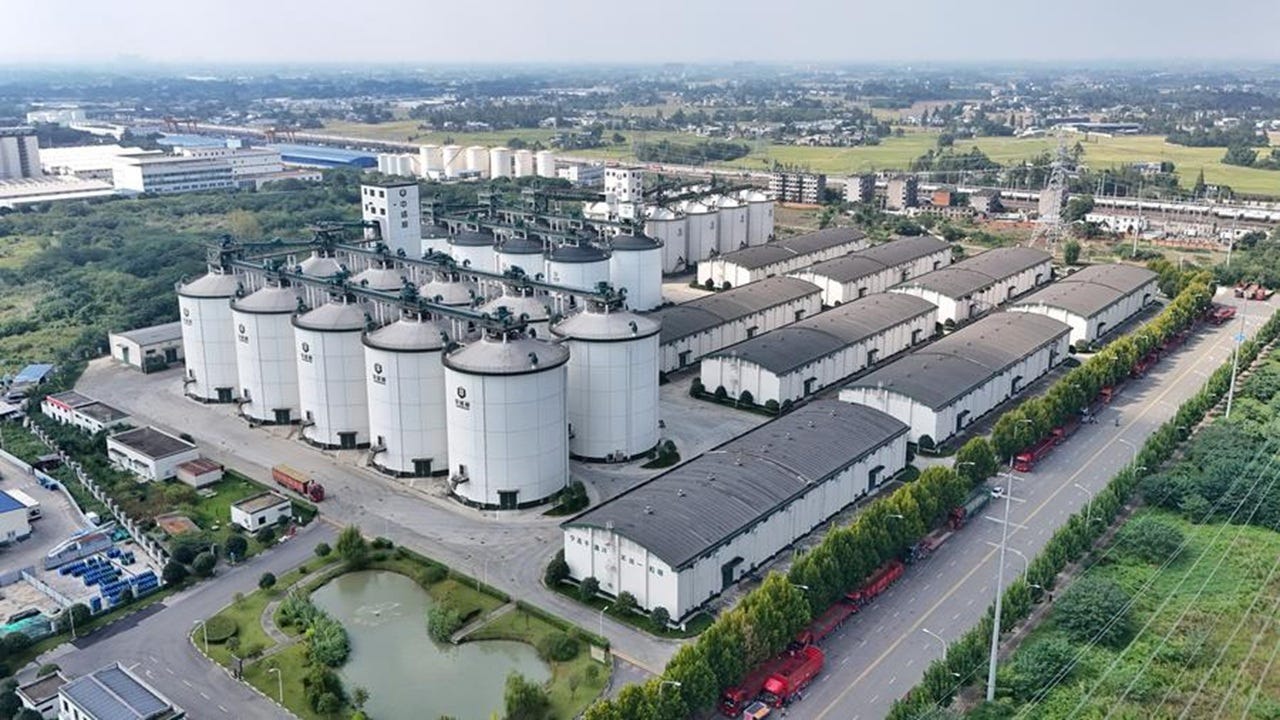
China’s strategic food reserves
In my prior article, I examined the role of cooperatives in alleviation of poverty and food security.
In this present essay, I will expand upon the role of the Chinese state in safeguarding food security, as well as the interplay between the state and cooperatives.
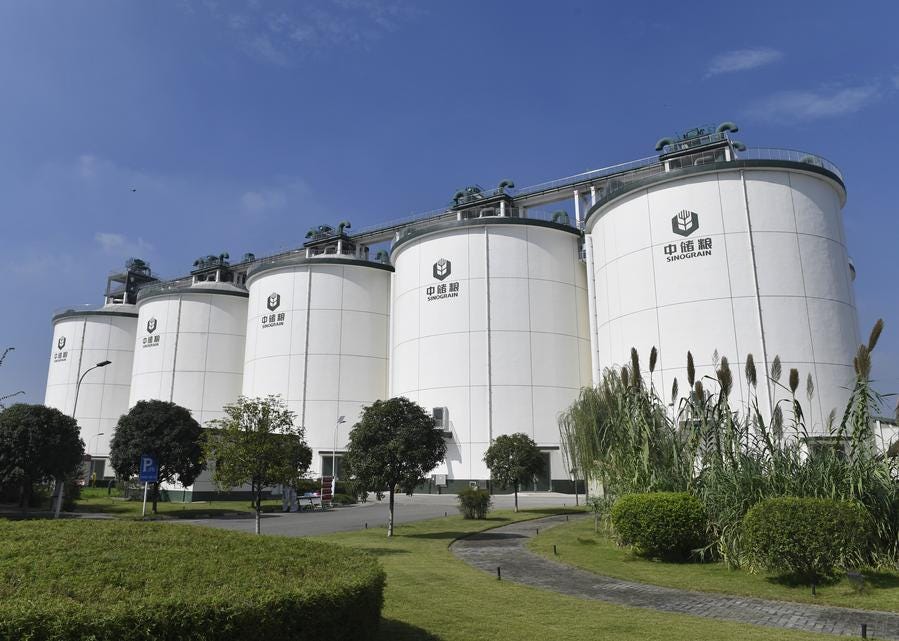
The largest and most directly relevant SOEs in China that oversee this strategy are China Grain Reserves Group (中储粮集团), also known by the name Sinograin; and the China Oil and Foodstuffs Corporation (中国粮油食品集团), known simply as COFCO.
Sinograin is the main company that handles reserves of grains, oils, meats, sugars, and other agricultural commodities. COFCO oversees processing, warehousing, planting, transportation, and shipping of foodstuffs.
Sinograin can be thought of as the SOE that handles the actual reserved quantities of foodstuffs, while COFCO processes, transports, warehouses, and distributes foodstuffs to various retailers at controlled prices.
In late 2022, these entities formed a joint venture called the China Enterprise United Grain Reserve Company (中企联合粮食储备有限公司), combining their efforts into a streamlined strategic grocery network, covering everything from sourcing and planting. Through this system, the process of reserving foodstuffs and then processing and wholesaling them is managed efficiently.
This isn’t to say that there isn’t a private sector in China; indeed, cooperative farms also exist, and there are plenty of private, for-profit, non-cooperative business enterprises working in foodstuffs. However, a state sector serves as a check on these entities.
If people believe that the private sector is overcharging them for essentials, they have a state-run option to source foodstuffs from.
Moreover, if there are shortages or supply chain problems, the government can open up reserves to auction, and allow various wholesalers and distributors to have grains at a price guaranteed to ensure farmers are adequately compensated, but not so high as to ensure that ordinary consumers are price gouged.
In terms of the interplay between the state sector and cooperative sector, the All-China Federation of Supply and Marketing Cooperatives (ACFSMC) stands as a means by which the state organizes and supports cooperatives.
This can look like technical support for cooperatives, research, development of local cooperative business models, or study of new agronomic innovations for cooperatives, among many other responsibilities.
The cooperative sector is itself not state-owned definitionally, but the government does guide and develop the creation of cooperative industries as part of socialist construction.
In turn, the Chinese state uses this infrastructure to enable other goals of socialist construction, including strategic partnerships between entities like COFCO and the ACFSMC.
State-run entities like COFCO and Sinograin can sell directly to cooperatives and have cooperatives be the front-end of the distribution chain to consumers whenever prices need to be stabilized. This enables lower costs to be guaranteed to the people.
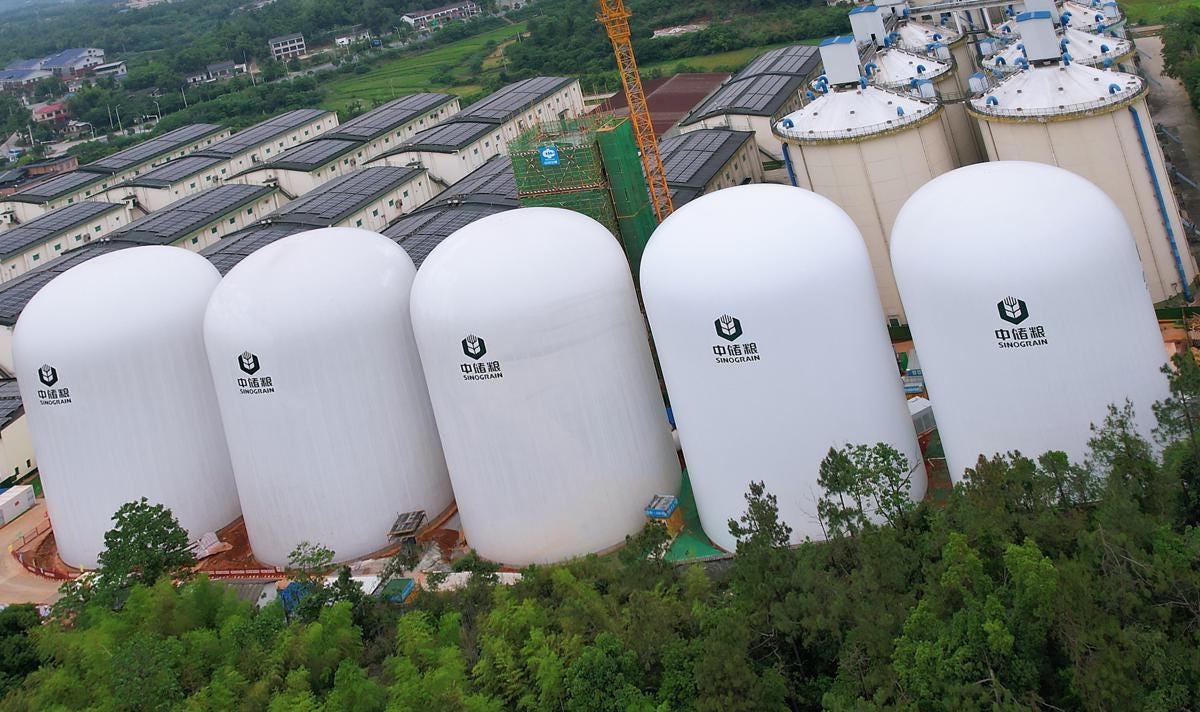
In terms of scale, there is not another strategic food reserve at any point in human history that comes close to how large China’s reserve is.
In terms of grain alone, in 2024 the strategic reserve was at 700 million metric tons of grain as of 2024. This is enough to feed the domestic population for a year.
With reserves at that scale, China can guarantee that, when crises unfold, its population will not go hungry.
Grain reserves are one element of the way that Chinese socialism has been able to anticipate and prepare for the current crisis the world is in.
China’s fertilizer reserves
China also has a large fertilizer reserve.
In fact, the second-biggest exporter of fertilizer in the world is China, and its largest producers are the SOEs Sinochem and the China National Agricultural Means of Production Group Corporation.
Sinochem also maintains supply chains for other components in the production chain of fertilizers, and can draw on reserves from other state sectors like the China Petroleum and Chemical Corporation (Sinopec) or the strategic reserve of sulphur to ensure that fertilizer production is ramped up, in the case of crises like the one we face today.
As a result, China is in a position where it can release fertilizer reserves to extend the shelf life of its grain reserves and attempt to bolster domestic production, such that its grain reserves can last even longer.
These policies require an immense amount of planning, which market logic would simply not find tolerable.
Indeed, in October 2025, The Economist lamented that China was betting on non-market forces in managing its reserves, buying up grains, fuel, chemical components, and minerals when times were good.
The Economist wrote:
Since many analysts expect a barrel of crude to be $10-20 cheaper next year, China may be wasting billions of yuan a month. Its refiners are also securing copper at an enormous loss: the “treatment” fee they usually charge miners to process ores has turned deeply negative—a feat enabled, traders suspect, by cheap state loans. Brazil has been selling soyabeans to China at a hefty premium.
Retrospectively, this logic is laughable. Today, the prices of basic necessities are skyrocketing. To have bought them at a “hefty premium” in 2025 will look like a bargain compared to the sky-high prices in 2026.
For a long time, the stockpiling policies of China were described as either incompetent mismanagement by the state or as a nefarious policy to prepare to wage aggressive war. Not once did Western pundits consider that these policies were strategic choices by China to prepare for crises that could be caused by a myriad of causes, such as climate change, or the militarism of the United States.
Rational socialist planning was never seen for what it actually is: a state-directed plan to anticipate needs and shape the economy in a direction that actually benefits the population, as opposed to allowing market forces to enrich a small handful of wealthy elites.
China’s five-year plans and strategic planning
Indeed, we can look at the most recent five-year plans to see how this is playing out in terms of China’s food security policy.
A priority of the 14th five-year plan (from 2021 to 2025) was to develop into a leader in agricultural modernization.
Even the neoliberal publication The Economist has acknowledged that China has become the leading country in agricultural sciences, with output into leading scientific journals being spearheaded by research in Chinese agricultural science.
China uses drone technology more than any other country, deploying more than 300,000 agricultural drones — more than half of the world’s total — to enable efficient transportation, fertilization, and seeding of crops.
China plans to lead on adaptable crop biotechnologies and novel protein sources.
China integrates AI systems like Deepseek into pest-identification programs, to reduce the use of chemical pesticides.
In terms of physical infrastructure, during its 14th five-year plan, China invested $757 billion USD in water conservation efforts, such as agricultural irrigation and hydroelectric power, among others.
These same priorities are reflected in the 15th five-year plan, which seeks to further integrate agricultural biosciences and artificial intelligence into existing agricultural networks.
These state directives are not only rational, they’re humane. China has secured resources necessary for the flourishing of 1.4 billion people.
As millions in the world will experience hunger and further impoverishment, China has taken adequate steps to ensure that its domestic population will not bear the weight of damage from choices undertaken by others.
Indeed, as other countries in East and Southeast Asia face the prospect of shortages, China has taken steps to ensure that it can export critical materials for industrial production.
China is beginning to allow export of jet fuel, as the airlines of several neighboring Asian countries experience severe shortages.
As shortages of fuel impact critical chemical industrial processes in countries like Japan, China steps in to fill gaps in these supply chains, to prevent critical industrial sectors from collapsing.
Because of sound environmental initiatives, China is in a prime position to export clean energy alternatives to countries suffering from the current energy crisis, as it is the largest producer of solar power, batteries, and electric vehicles.
Not only has China’s long-term strategic stockpiling secured the well-being of its own population; it is also securing the well-being of other countries facing this crisis as well.
As the world plunges deeper into a generation-defining crisis, happening at the tail-end of yet another generation-defining crisis, we can see that alternative systems are capable of actually addressing these problems effectively and rationally.
State planning and the socialist mode of production, in the form of state-owned enterprises and cooperatives under the guidance of a communist party, are capable of addressing fundamental needs.
As the crises of the modern era are increasingly showing us, a better world is possible. China is providing an example of how.
"...These policies require an immense amount of planning, which market logic would simply not find tolerable..."
This here is the core of the issue. The Euro-colonial countres are ideologically wedded to a system that does not care about people or stability, and intrinsically does not value any kind of mechanisms to preserve stability and ensuring people have the basics of life. Such things, in the capitalist systems, are expenses, not investments.
In fact their systems are most profitable for the rich when there is volatility and instability. That is why their rich doubled their wealth during COVID19 and are currently getting massively richer from years of needless wars in Ukraine, and the middle east.
So no they dont plan - their oligarchy do not want to plan. Planning would actually benefit the masses, instead of just them alone.
The Economist piece from October 2025 is the real buried lead here. They looked at China buying soybeans at a "hefty premium" and called it wasteful because crude was expected to drop $10-20.
That's textbook expected-value thinking applied to a tail-risk problem. Strategic reserves aren't meant to be NPV-positive against the base case. They're a put option against the worst case. Calling them wasteful because the base case looks benign is like cancelling your home insurance because your house didn't burn down last year.
The fact that a publication staffed by very smart people consistently mispriced this tells you something about how deeply market-logic framing can blind you to scenarios you've decided are unlikely.